There’s a quiet assumption sitting underneath most ministry thinking: if we do the right things, we’ll get the right results. Preach clearly, run the program, train the leaders—pull the lever, watch the light turn on. It’s neat, reassuring, and mostly wrong. And yet we see so many books that talk about the methodology that works. I work for a network that talks about what works.
It’s because ministry is a wicked system.
The idea of a wicked system is not a moral term. It doesn’t mean that thinking about systems is worldly and therefore sinful. It is a technical term that has been used to describe a complex social system. If it helps you could use the word “feral” and for its opposite, “domesticated” if that makes it easy for you to get past the idea of the “wicked” system.
Definitions
What is a Tame/ Domesticated System?
A tame system is a system that has clear solutions and boundaries. You press the button and you know what will happen. Mathematics and chess are good examples. You can play chess and the rules never change. You know who wins and who loses. Similarly with maths. No matter how many times I solve a problem, the rules of mathematics don’t change. The boundaries, rules and solutions are clear.
At the end of the day, a tame system is like pulling a level and seeing a light come on. You know what will happen if you do X, hence it is “tame” or “domesticated”: it does what it is meant to do. It’s mechanistic. It’s predictable.
What is a Wicked/ Feral System?
A wicked system is more complex. There are numerous factors that all play on each other.
“The notion of wicked systems extends complex systems thinking to the point where the situation changes every time an effect is made on it.”1
This is why it is an important way of thinking of social planning. You could say, for example, that the problem with a neighbourhood is crime. So you fix the crime problem but this causes issues with changing the socio-economic status of the neighbourhood which means that the people who live there can no longer afford to. So you now need to deal with the problem of housing people who can no longer afford to live in their neighbourhood2.
This is why it is called “wicked” or “feral”. It doesn’t stick to the rules and do what it is meant to do all the time. Doing one thing might lead to a range of unintended or unforeseen consequences.
Is Ministry a Wicked System?
Is church ministry a wicked system? Of course, and here are three reasons why.
1. The Spirit of God is not Tame
The Spirit of God will do what he wants (John 3:8). He is not some impersonal force that we can make do one thing or another. While we can see what he is doing through the Word, we cannot control him. He is not lever to pull or a button to press.
2. People are Complex
When I was studying psychology, we used lab rats a lot. This is because the life of a lab rat is sex, eating, drinking and sleeping. Mess with one of those aspects and you have a brilliantly compliant little being. A tame being.
Lab rats don’t have complex emotional systems or past baggage that comes with it. Lab rats don’t have issues with their parents that have led to behavioral issues. Lab rats, as far as I know, are not being renewed into the knowledge of their creator, they are not dealing with the sin against their creator. I could go on. People are not lab rats, they are complex beings. And ministry is all about working with people.
3. Churches are REALLY Complex
If people are complex, churches which are made up of people are really complex. There is the organisation, the culture, the history, the relationships. Again I could go on. The point here is that churches are a complex set of systems and a complex organism.
Part of what makes church systems so complex is that you need to step back and see the whole system. Tame systems are so much more attractive. And there will be some tame systems in your church system like writing a set of Bible studies or running an event or even the running of the Sunday service. You can see the beginning, middle and end. You know when it is over and if it was good. It would be easy to merely focus on the tame systems if you don’t stop and think about it.
Ways Forward
Given that churches and ministry are more than tame systems what do we need to keep in mind?
1. Inputs and Outputs Still Matter
It is very easy to read and understand wicked systems, shrug and think “Well, it’s really complicated. In fact it is too complicated. We should just give up. Focus on the tame systems and hope for the best”.
But this is not the purpose of identifying a wicked system. There are still outputs that people are seeking to achieve. For social policy scientists they are still seeking to achieve a well functioning society. Healthcare workers want as many healthy people as possible3. Even though it is a wicked system, they still measure what is happening in the system.
In short, while we need to acknowledge that there is not a nice and neat relationship between input and outputs in a wicked system, they still matter. In fact because of its complexity we need to make sure we are measuring things well to understand accurately what is going on.
2. Ecosystem and Pathway Thinking Help Tame a Wicked System
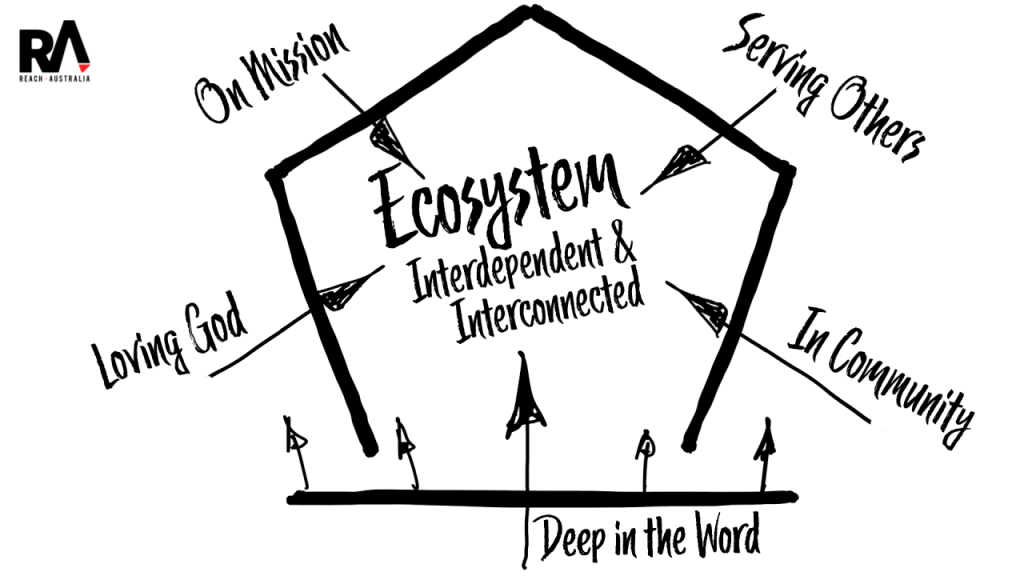
Using tools like thinking through ecosystems and pathway thinking can help bring some domestication to a wicked or feral system. This is best illustrated in a workshop by Greg Lee. Ecosystems recognise that there are is some complexity to the system and seeks to bring some order to it:
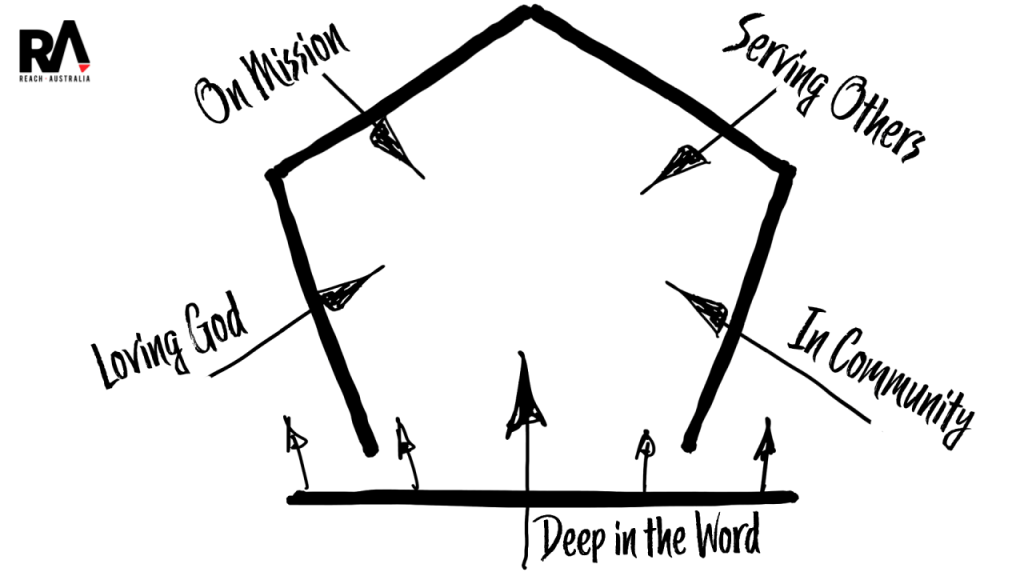
But let me illustrate briefly. When there is a problem we tend to default to tame system thinking. For example people in a congregation start complaining that they don’t feel like they are being cared for or looked after. Tame system thinking would identify this an “in community” problem and then address it as pouring more resources into the congregation to help it deal with the social problem.
Wicked system thinking would stop and think about what else is going on in the system. Are there other factors that might be causing a problem in the system? For example is the issue not so much about ‘in community” and in fact there are already a number of resources being poured into this part of the system. On the other hand, after some reflection and investigation, it becomes apparent that the congregation has not focussed on mission for some time. The presenting issue is not actually leading to the real problem. Once the congregation is focused more on mission, it finds its purpose and builds relationships.
The elements of the ecosystem are independent but also interconnected in the wicked system.
3. If your system worked last year, it is already out of date
As we act on a system it will change and evolve. This means we cannot find the perfect system of ministry and continually come back and see how the system has changed. Hopefully, for example, your church will grow. It will not be the church it was last year. The number of relationships have increased. The average maturity of the church will have increased.
It’s not the same church it was last year.
Conclusion
Ministry is tricky. Like social policy, healthcare or economic systems there are a lot of interconnected ideas, inputs and outputs that make it somewhat uncontrollable or feral. But there are a number of tools and ways of thinking that will not completely tame but will bring some order to a wicked system.
FOOTNOTES
- https://theforge.defence.gov.au/jpme/defence/cognitive-abilities/wicked-systems ↩︎
- This is an important illustration because the concept of wicked systems came from social scientists Rittel and Webber: Rittel, Horst W. J. and Webber, Melvin M. , “Dilemmas in a General Theory of Planning” , Policy Sciences, 4:2 (1973:June) pp155-169.
↩︎ - Atul Gawande (2012) “Something Wicked This Way Comes” https://www.newyorker.com/news/daily-comment/something-wicked-this-way-comes Retrieved Oct 6, 2024 ↩︎
 Peter D Hughes